
History
How Aligarh Became India's Hardware City
Aligarh sits in western Uttar Pradesh, roughly 140 kilometres southeast of Delhi. The city's brass and lock-making tradition began in the colonial era — British administrative demand for padlocks, builders' ironmongery, and railway hardware established Aligarh as an organised metalwork centre by the early 1900s.
The cluster grew through successive industrial waves: independence-era expansion into civil hardware, the 1970s shift toward export manufacturing, the 1990s liberalisation that opened the cluster to global B2B buyers, and the 2010s modernisation that brought CNC machining, automated electroplating, PVD finishing, and ISO certification into mainstream practice.
Today the cluster comprises thousands of enterprises — from single-person specialist polishing units to integrated manufacturing companies operating across multiple acres with in-house foundries, machining shops, finishing lines, and export logistics infrastructure.
That history deserves more space than a buyer's guide can give it. Leena Hardware, our domestic brand operating from the same cluster, has written a longer account of how Aligarh became India's brass and hardware capital — worth reading for the craft and workshop detail behind the numbers below.
1890s
Cluster origins
140km
From New Delhi
1,000s
Enterprises in the cluster
60+
Export destination countries
Structure
The Structure of the Cluster Today
The Aligarh hardware cluster is not a single industrial park. It is a distributed network spread across multiple neighbourhoods and industrial zones, including the older workshop districts in central Aligarh and the newer organised industrial estates on the city periphery.
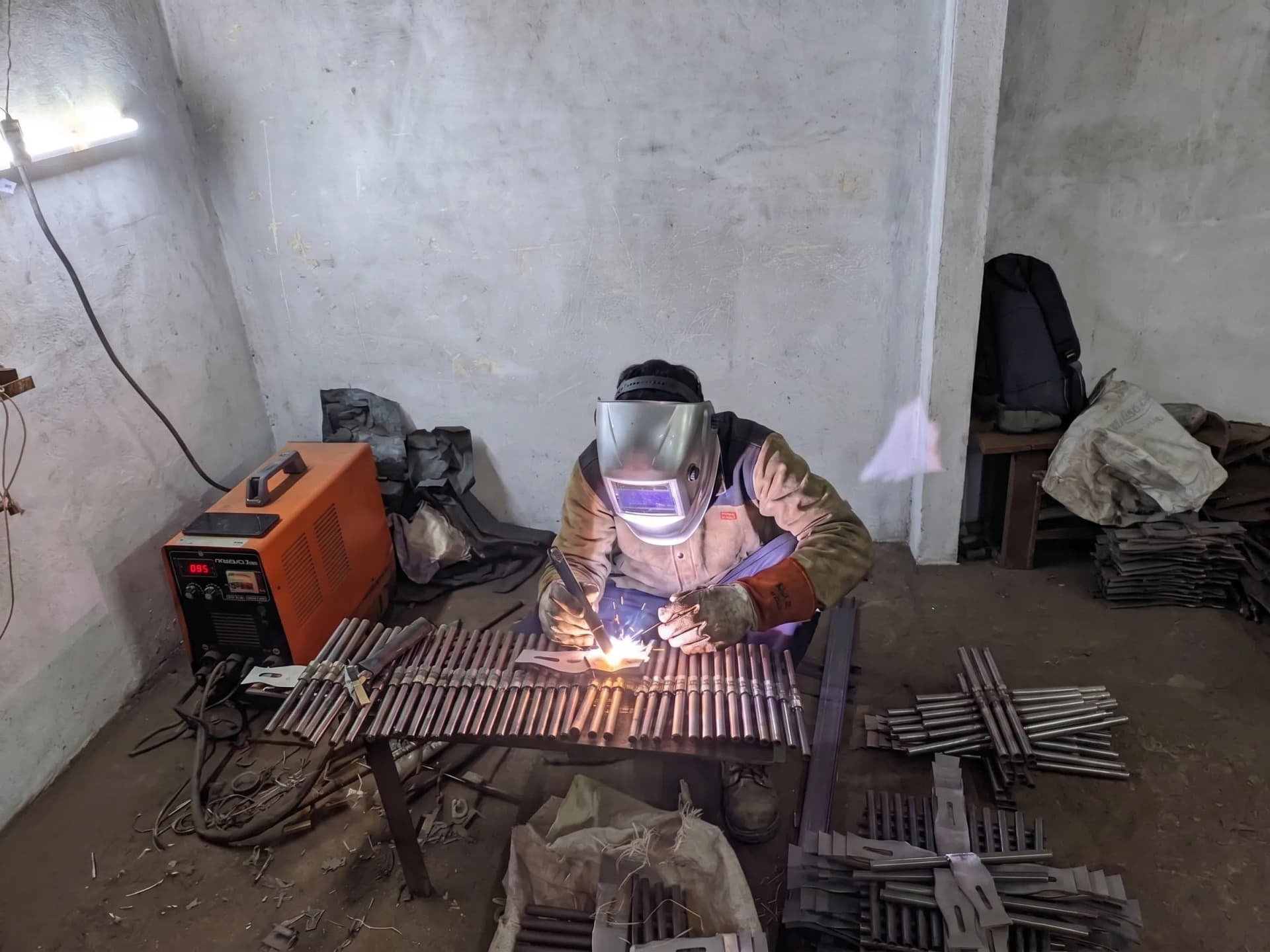
Functionally, the cluster splits into four broad tiers. At the base sit thousands of small specialised workshops handling single processes — pure casting, pure polishing, pure plating. Above them sit small assembled-product manufacturers serving the domestic market. Above those sit mid-sized integrated manufacturers like Nexus, with full in-house production and export capability. At the top sit very large integrated manufacturers serving high-volume contract OEM for global brands.
Trading companies — non-manufacturing intermediaries — operate across the entire structure, sourcing from various workshop tiers and re-exporting under their own commercial identity. This is where buyer due diligence matters most.
Due Diligence
Manufacturer vs Trader — How to Tell the Difference
This is the single most consequential distinction for a global buyer entering Aligarh. A trader can appear, to a remote buyer, identical to a manufacturer — modern website, professional communication, ISO logos, claims of in-house production. The distinction shows up only when you start asking the right verification questions.
A genuine manufacturer can: show the GST registered factory address that matches their export shipping origin; provide a live video tour of the production floor on demand; hold first-party certifications (ISO 9001 issued in the manufacturer's name, not subcontracted); employ a named QC head with whom you can communicate; and produce export history showing consistent Bills of Lading from the same factory address.
Verification Questions to Ask
- →Can you share a video tour of your factory floor today?
- →What is your registered GST factory address?
- →Is your ISO 9001 / 14001 issued in your company name?
- →Who is your QC head and can I speak with them directly?
- →Can you share three recent Bills of Lading from the past 90 days?
- →What processes are in-house and what is subcontracted?
- →What is your factory's installed monthly production capacity?
- →Can I visit the factory in person? (Trustworthy answer is always yes)
Capability
Production Capabilities Across the Cluster
Aligarh manufacturers collectively offer the full hardware production stack. The dominant categories are brass and iron builders' hardware — door handles, knobs, locks, hinges, and decorative trim — but the cluster also supplies significant volumes of aluminium hardware, zinc alloy stamped parts, curtain hardware, railing fittings, lighting hardware, sanitary fittings, and OEM brass parts for global hardware brands.
Process capabilities across the cluster include sand casting, gravity die casting, pressure die casting, forging, CNC machining, manual machining, sheet metal stamping, polishing, electroplating (chrome, nickel, brass), powder coating, anodising, PVD coating, lacquering, and antique/aged finishing by hand. Not every manufacturer offers every process — buyers should match capability to specification.
Casting & Forging
Sand cast, gravity die, pressure die, hot/cold forge. Brass, aluminium, zinc, iron substrates.
Machining & Assembly
CNC turning and milling, manual machining, drilling, tapping, sub-assembly to finished spec.
Finishing
Polish, brush, antique, electroplate, powder coat, PVD, anodise, lacquer, hand-aged finishes.
Quality
Quality Standards You Can Reasonably Expect
The quality range across Aligarh is wide, which means buyers must verify supplier-specific standards rather than relying on cluster averages. Tier-one integrated manufacturers operating to ISO 9001 and AQL 2.5 standards deliver quality directly comparable to European brass hardware. Lower-tier workshop output, which sometimes finds its way into export channels via intermediaries, is variable.
For B2B buyers, the practical safeguards are: insist on AQL 2.5 specification in the purchase order; require pre-dispatch photographic and video evidence; commission third-party AQL inspection on initial orders (services like SGS, Bureau Veritas, and Intertek operate in Aligarh); and build the relationship slowly with smaller initial orders before scaling to programme volumes.
Working Practices
Communication, Payment, and Working Practices
Aligarh's export-facing manufacturers are accustomed to international B2B communication. English-language email and WhatsApp are universal; video calls on Google Meet or Zoom are routine; finish samples ship by DHL or FedEx as standard; and export documentation (commercial invoice, packing list, Certificate of Origin) is produced fluently.
Standard payment terms across the cluster are 30–50% advance via T/T, balance against scanned Bill of Lading before document release. Letter of Credit is supported by most mid-tier and tier-one manufacturers for larger orders. Indian banking systems handle inbound USD, EUR, GBP, AED, and AUD wire transfers without friction at the manufacturer end.
Logistics
Export Infrastructure Connecting Aligarh to Global Markets
Aligarh's location works in the cluster's favour for export logistics. Sea freight runs through JNPT Mumbai (Nhava Sheva) — the largest container port in India — with truck transit from Aligarh of 1,400 kilometres and 36–48 hours by road, or rail container service via ICD Tughlakabad for consolidated cargo. Mundra and Pipavav (Gujarat) are alternative discharge ports for specific routes.
Air freight runs through IGI Delhi, only 140 kilometres away — short trucking time means sample and urgent shipments can move from factory floor to international cargo terminal within 24 hours. Major carriers (Lufthansa, Emirates, Qatar Airways, Singapore Airlines) operate cargo capacity from IGI to all major hardware-import markets.
Our Position
How Nexus Fittings Sits Within the Cluster
Nexus Fittings is the international export identity of Nexus International — a family-owned tier-one integrated manufacturer in Aligarh, operating since 1990. We run our own brass foundry, machining shop, polishing and electroplating lines, and packing facility under one operational identity.
Our model has always been direct B2B with no intermediary layer — global importers, distributors, and OEM brands engage with us directly, not through a trading reseller. We operate ISO 9001 quality systems, hold our own export credentials, and ship under our own commercial documentation. Inquiries arrive on email, WhatsApp, or through our RFQ form and are handled by the manufacturing team directly.
FAQ
Frequently Asked Questions
Why is Aligarh the centre of India's hardware industry?
Continuous metalwork tradition since the late 1800s, originally driven by colonial demand for brass and ironmongery. Over generations the cluster has built deep skill in brass casting, forging, machining, and finishing across thousands of workshops and integrated units.
How do I tell a direct manufacturer from a trading company?
Direct manufacturers can show a verifiable factory address with on-site casting, machining, and finishing capability. They hold first-party ISO certifications, employ named QC staff, and can provide live video tours and recent Bills of Lading from the same factory.
What product categories does the cluster supply?
Brass and iron door handles, knobs, locks, hinges, builder's hardware, window fittings, curtain hardware, railing components, decorative trim, OEM brass parts for global brands. Aligarh also produces aluminium and zinc-alloy hardware.
What is the quality range across Aligarh?
Wide — from variable workshop output to tier-one export quality directly comparable to European brass hardware. Buyer due diligence is essential. Insist on AQL 2.5 specification in the PO and commission third-party inspection on initial orders.
Can I visit the factory in person before placing an order?
Yes. Genuine manufacturers welcome buyer factory visits. The standard route is to fly to IGI Delhi, drive 140km to Aligarh (around 3 hours), tour the facility, and meet the production team. Most international buyers visit at least once before scaling order volume.