
Context
Why Finish Matters Commercially, Not Just Aesthetically
Finish is the dominant cost variable in decorative hardware pricing. The same brass door lever can be priced 20–60% apart between a basic lacquered polished finish and a multi-step antique patination with hand-rubbed highlights. It is also the specification most likely to cause buyer-side disappointment when it has not been agreed precisely against a physical sample.
For distributors, finish dictates which retail price tier the product sits in. For private label brands, finish defines brand identity. For architects and project buyers, finish determines whether the product matches a wider specification of taps, switches, and accessories. Getting it right at the specification stage is non-negotiable.
Finish 01
Polished Brass (PB)
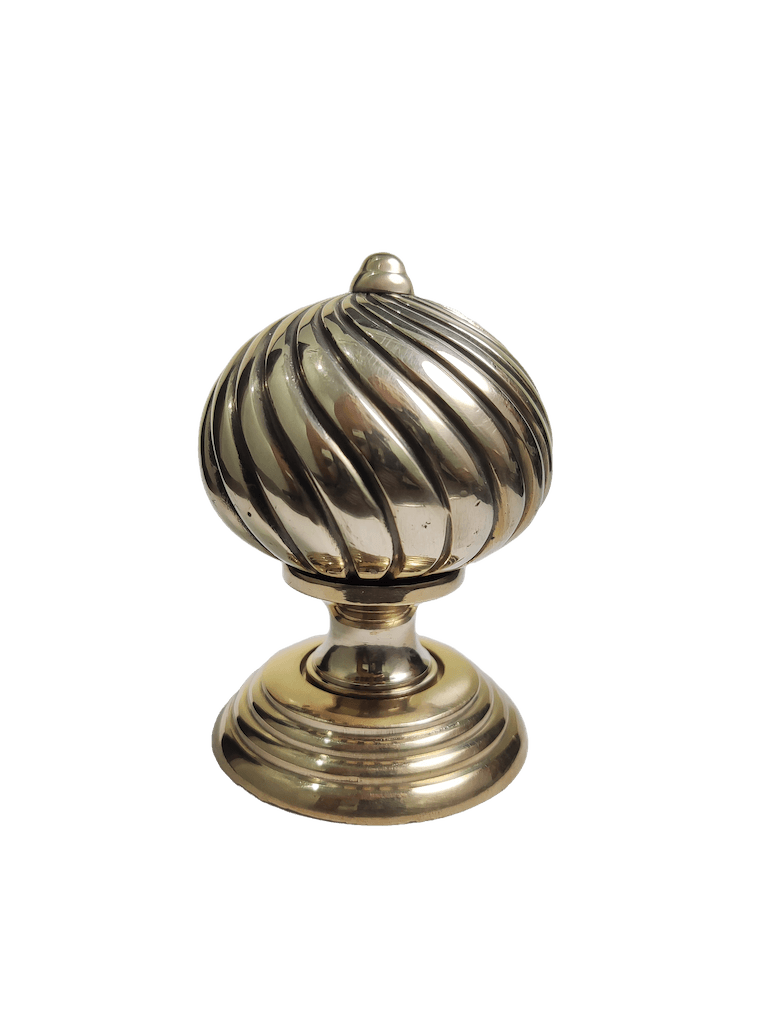
Polished brass is the traditional decorative finish — high-shine, mirror-like, and warm gold in tone. It is produced by mechanical buffing through a sequence of progressively finer abrasive wheels, ending in a soft cotton buff with polishing compound. The result is then lacquered (in most B2B specifications) to slow tarnish.
Polished brass shows fingerprints, water spots, and minor scratches readily. Lacquered PB retains its appearance for years in interior conditions; unlacquered PB will begin to develop a warmer patina within weeks and a full antique tone within a few years if not regularly polished. Both are valid commercial options — they need to be specified explicitly.
Polished Brass — At a Glance
- →Process: mechanical buffing, optional lacquer seal
- →Appearance: high-shine, warm gold
- →Ageing: lacquered retains appearance; unlacquered patinates
- →Market preference: classical, traditional, period interiors; GCC market
- →Maintenance: regular wipe-down; show fingerprints
Finish 02
Brushed Brass / Satin Brass (SB)
Brushed brass — also marketed as satin brass — is currently the single fastest-growing brass finish in the UK and European residential markets. The finish is produced by mechanically scoring fine parallel lines across the polished surface, usually with an abrasive belt or wheel, then applying a clear protective lacquer.
The matte, low-reflection surface masks fingerprints and minor daily wear extremely well. The tone sits between warm yellow-gold and subtle champagne, depending on the brass alloy and the brushing direction. It pairs naturally with modern joinery, marble, terrazzo, and dark stained timber — which is why it has displaced polished brass in much of the contemporary residential market over the last five years.
Finish 03
Antique Brass (AB)
Antique brass is a chemically patinated finish that simulates the appearance of decades of natural ageing. The process uses a sulphide-based solution that reacts with the brass surface to produce a dark brown to near-black tone. The patina is then selectively relieved — high points and raised detail are buffed back to brighter brass, leaving the recesses and crevices darker.
The depth and tone of antique brass can be controlled precisely. Light antique, medium antique, and dark antique are all common specifications, and the relief pattern (how aggressively high points are buffed back) can be agreed against sample. Once achieved, the finish is sealed with lacquer for stability.
Antique brass remains the dominant finish for heritage restoration projects, period properties, traditional ironmongers, and the conservation market across the UK, France, Italy, and parts of the United States. Demand is steady rather than trending.
Finish 04
Matte Black
Matte black is the dominant contemporary hardware finish in the global residential market in 2026 — particularly across the UK, USA, Australia, and Canada. On brass hardware, matte black is achieved through powder coating, electrocoating, or a high-grade PVD (Physical Vapour Deposition) coating. Specification choice matters: powder coating is most economical; PVD is the most durable and scratch-resistant.
Buyers should be explicit about the coating method in the purchase order. Cheap matte black finishes can chip at the edges under repeated use; well-applied powder coating or PVD on a properly prepared brass substrate will retain appearance for many years in interior conditions. For high-traffic commercial use, specify PVD.
Finish 05
Satin Nickel (SN) and Polished Nickel (PN)
Nickel finishes are achieved through electroplating — a thin layer of nickel is electrochemically deposited over the brass substrate. Satin nickel is brushed after plating; polished nickel is buffed to a high shine. Both are clear-coated for protection.
Satin nickel is the dominant nickel finish in North American residential hardware, and a steady mid-market specification across the UK and Europe. The cool grey-silver tone pairs with brushed stainless steel appliances and contemporary fittings. Polished nickel is more reflective than satin and warmer than chrome — a preferred specification for transitional and luxury residential projects.
Finish 06
Chrome (CP) and Satin Chrome
Chrome plating involves an electroplated layer of chromium over a nickel undercoat on the brass substrate. Polished chrome is the high-shine cool silver finish familiar from commercial and bathroom hardware globally. Satin chrome is brushed before final passivation, giving a matte cool-silver tone.
Chrome remains the high-volume specification for commercial, hospitality, and bathroom hardware applications worldwide. It is durable, easy to clean, and economically priced — which is why hotel groups and project specifiers continue to default to chrome for high-utilisation environments.
Finish 07
Bronze Finishes — Oil Rubbed Bronze (ORB) and Aged Bronze
Oil Rubbed Bronze (ORB) and Aged Bronze are dark brown-to-near-black finishes with subtle warm undertones. On brass substrate, they are produced through chemical patination — often using ammonia or sulphide chemistry — with a wax or oil seal that gives the surface a soft, low-shine warmth.
ORB is a dominant North American specification, particularly in craftsman and traditional residential categories. It pairs with warm timber tones, stone, and bronze plumbing fittings. The finish is intended to develop additional patina with handling over time — it is not a static appearance.
Finish 08
Champagne Gold and Modern Specialty Finishes
Champagne gold is a contemporary specification that sits between brushed brass and satin nickel in tone — a soft, muted warm gold with a brushed surface. It is achieved through PVD coating or selective electroplating processes. Demand is strongest in premium residential, hospitality, and luxury interior categories across the GCC, USA, and Asia.
Other trending specialty finishes in 2026 include rose gold, gunmetal grey, burnt copper, and graphite — most produced through PVD processes, which offer the broadest tonal range and the highest durability of any modern finishing method. PVD pricing is higher than electroplating; specify clearly in the RFQ.
Head to Head
Finish Comparisons Buyers Ask About
Most finish confusion comes down to naming: retailers, brands, and manufacturers use overlapping terms for surfaces that are produced differently. These are the comparisons we are asked about most, answered the way we would answer them across a sample table.
Aged brass vs antique brass
Antique brass is chemically patinated in production to a controlled, repeatable dark tone, then usually lacquered so it stays put. Aged brass generally refers to a lighter, softer version of the same treatment — or to unlacquered brass that has been left to age naturally. If you need every piece in a batch to match, specify antique brass against a sample; if you want living patina, specify unlacquered.
Antique brass vs polished brass
Same metal, opposite intent. Polished brass is buffed to a bright mirror gold; antique brass is deliberately darkened to look decades old, with high points relieved back to brighter metal. Polished suits classical and GCC-market interiors; antique dominates heritage restoration and period property work.
Satin brass vs brushed brass
In practice these are the same finish — fine parallel brushing that produces a matte, low-glare warm gold. Some brands use 'satin' for a slightly finer grain than 'brushed', but there is no industry-standard distinction. What matters is agreeing the grain against a physical sample.
Brushed brass vs polished brass
Brushed hides fingerprints and daily wear far better and reads contemporary; polished is brighter, more traditional, and shows marks readily. Brushed brass has displaced polished as the default residential specification in the UK and much of the EU over the last five years.
Antique brass vs oil rubbed bronze
Both are dark chemical patinas, but antique brass keeps a warm brass-gold undertone with relieved highlights, while oil rubbed bronze runs darker — brown to near-black — with a soft oiled sheen and minimal relief. ORB is largely a North American specification; antique brass is the heritage default in the UK and Europe.
Satin brass vs brushed gold
'Brushed gold' is a marketing name rather than a production term. It usually describes either satin brass (brushed solid brass, lacquered) or a PVD gold coating over another substrate. The PVD version is more scratch-resistant and tonally cooler; solid satin brass can be refinished and ages as brass does. Ask which process is behind the name before comparing prices.
What is tumbled brass?
Tumbled brass is barrel-finished — pieces are tumbled with media so edges soften and the surface picks up a matte, gently distressed texture. It reads as lived-in rather than aged-dark, and is popular for cabinet hardware and heritage-styled door furniture.
Burnished brass vs antique brass
Burnished brass is hand-finished so the surface carries polished highlights over a slightly darkened ground — lighter and livelier than antique brass, which is patinated darker and more uniformly. Burnished sits between polished and antique on the tonal scale.
Specifier Reference
US & BHMA Hardware Finish Codes: Cross-Reference Chart
North American specifications rarely say “brushed brass” — they call the finish by its ANSI/BHMA number or the older US code. If you buy for the US market, or you have received an architect's schedule quoting codes like 626 or US10B, this chart translates them into the finish names used through this guide and into our production palette.
| BHMA Code | US Code | Finish Name | Nearest Nexus Finish |
|---|---|---|---|
| 605 | US3 | Bright brass, clear coated | Polished Brass (lacquered) |
| 606 | US4 | Satin brass, clear coated | Brushed / Satin Brass |
| 609 | US5 | Satin brass, blackened & relieved | Antique Brass |
| 613 | US10B | Dark oxidised bronze, oil rubbed | Oil Rubbed Bronze |
| — | US10A | Antique bronze, oxidised | Dark Antique Brass / Bronze |
| 619 | US15 | Satin nickel, clear coated | Satin Nickel |
| 622 | US19 | Flat black coated | Matte Black |
| 625 | US26 | Bright chromium plated | Polished Chrome |
| 626 | US26D | Satin chromium plated | Satin Chrome |
| 628 | US28 | Satin aluminium, clear anodised | Satin Anodised Aluminium |
| 629 | US32 | Bright stainless steel | Not in range — nearest: Polished Chrome |
| 630 | US32D | Satin stainless steel | Not in range — nearest: Satin Chrome / Satin Nickel |
Common trade equivalences — BHMA numbers describe the finish appearance and base process, and exact tone still needs sign-off against a physical sample. Codes for stainless substrates are listed for translation only.
Every finish in the chart's right-hand column is shown with swatches on our finishes page, and can be applied across door handles, knobs, hooks, and matching door furniture from a single production batch.
Critical Detail
Lacquered vs Unlacquered — The Decision That Affects Every Finish
Almost every brass finish can be supplied either lacquered (clear protective coating applied after finishing) or unlacquered (the raw finished brass surface). This is an important commercial decision, not a technical default.
Lacquered finishes hold their appearance for years with minimal maintenance, but they cannot be re-polished without stripping and re-coating. Unlacquered finishes develop a natural patina over time — desirable for some markets (heritage UK, traditional EU, certain US specifications) and undesirable for others (GCC, general residential retail). The end-customer expectation should drive the specification.
Lacquered
- +Holds appearance for years
- +Minimal end-customer maintenance
- +Suitable for retail and project markets
- —Cannot be re-polished without stripping
- —Lacquer can yellow or chip over decades
Unlacquered
- +Develops authentic natural patina
- +Can be re-polished indefinitely
- +Preferred for heritage and high-end residential
- —Requires end-customer maintenance
- —Patina rate is climate-dependent
Purchase Order
How to Specify Finish in Your Purchase Order
Verbal or photographic finish specifications are insufficient. Every B2B hardware purchase order should specify finish against a physical sample reference — either an approved sample piece retained on file at the manufacturer, or a Pantone or RAL reference plus a sample swatch.
For OEM and private label work, request a finish sample step before bulk production: the manufacturer produces three or four finish variations (light, medium, dark, or warm/cool) on the actual production substrate, ships them via DHL or FedEx, and you countersign the chosen one as the production reference. This countersigned sample becomes the QC benchmark for the entire run.
Minimum Finish Specification Checklist
- →Finish name (industry-standard term: PB, SB, AB, SN, CP, ORB, etc.)
- →Coating method (mechanical, electroplating, PVD, powder coat, patination)
- →Lacquered or unlacquered — specify explicitly
- →Tonal reference: light / medium / dark, or specific Pantone / RAL
- →Approved physical sample retained on file at the factory
- →QC acceptance criteria for finish (consistency, coverage, defects)
FAQ
Frequently Asked Questions
What is the difference between polished brass and brushed brass?
Polished brass is buffed to a high mirror-like shine. Brushed (satin) brass is mechanically scored with fine parallel lines to create a matte, low-glare surface. Both can be supplied lacquered or unlacquered. Brushed brass hides fingerprints and minor wear far better than polished.
Does antique brass need to age naturally over time?
No. Antique brass is produced through a controlled chemical patination process — typically using a sulphide solution. The depth and tone are produced on the production floor, then sealed with lacquer. Natural ageing is not required.
Is matte black hardware durable?
Yes, when applied correctly. Powder-coated matte black holds well in residential conditions. PVD-coated matte black is significantly more scratch-resistant and is the recommended specification for high-traffic commercial and hospitality use.
Which brass finishes are trending in 2026?
Brushed brass, matte black, satin nickel, and champagne gold dominate residential demand across the UK, USA, Australia, and parts of Europe in 2026. Antique brass remains steady for heritage and restoration. Polished brass retains strong demand in the GCC and traditional segments.
Can I order multiple finishes in the same purchase order?
Yes. Most Indian manufacturers accept multi-finish purchase orders, with each finish counted separately for MOQ purposes. This is common practice for distributor and private label buyers building a multi-finish product range.